Contact us
 Visit CPRE.org
 Donate
Our Response to the Whitestones Solar Farm Proposal
At CPRE Peak District and South Yorkshire, we’ve submitted our representation as part of the public consultation on the proposed Whitestones Solar Farm.
While we strongly support renewable energy and the transition to net zero, we believe this particular proposal raises serious concerns.
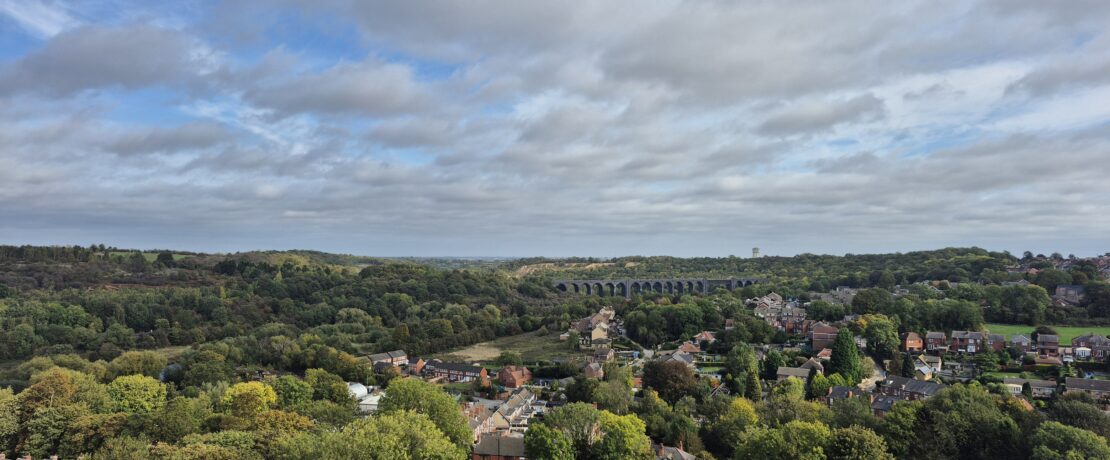
If approved, the project could be located across three broad areas: Whitestone 1 (W1) in the north near Conisbrough, Whitestone 2 (W2) in the centre around Ulley and near Todwick and Whitestone 3 (W3), in the south near Kiverton, Harthill and Woodall.
We believe the scale and design of the scheme does not respect the intrinsic beauty or character of South Yorkshire’s countryside. It lacks meaningful integration into the landscape and fails to offer clear benefits to the local community. In areas W1 and W2, we’re particularly concerned about significant harm to landscape character and heritage. Even in W3, where the scale is smaller, we believe more of the site should be dedicated to screening and nature recovery to meet national and local environmental goals.
We’re calling for a much-reduced scheme – one that better balances benefits and harms. Without stronger mitigation and compensation measures, we believe the current proposal falls short. We’ve urged the applicant to revise the Environmental Statement and reconsult before moving forward.
Some of our broad concerns about the Whitestones Proposal
Clustering and Scale
- Three major solar clusters are proposed, with no overarching spatial or nature recovery strategy in place.
- As a Nationally Significant Infrastructure Project (NSIP), the process bypasses local decision-making and also raises concerns about accessibility.
- The Environmental Statement is too complex; we’re calling for clearer, cluster-specific breakdowns and a 4-week consultation extension.
- Nearby solar and battery projects must be included in cumulative impact assessments, as required by the Planning Inspectorate (PINS).
- Omissions of other local projects
Justification
- National need for low-carbon energy is cited, but with 738GW already queued, it’s unclear if this solar farm is essential or commercially driven.
- CPRE is calling on the government to adopt a renewables strategy that prioritises rooftops, surface car parks and brownfield sites.
- Claims of powering 250,000 homes are theoretical; real output will vary due to weather, ageing and other factors.
- No guaranteed local benefits like cheaper electricity or community funds; we’re calling for direct socio-economic support and a decommissioning fund if approved.
Lifespan & Decommissioning
- 60-year project lifespan may require major equipment replacements (e.g., PV modules, inverters, batteries) within shorter cycles.
- The Environmental Statement should assess impacts of these replacements and clarify when new approvals are needed.
- The scope of the Development Consent Order is too wide and raises concerns about compliance with Environmental Impact Assessment regulations and long-term environmental impacts.
- Carbon emissions from replacements should be factored into the Environmental Statement.
Future Baseline
- The draft Environmental Statement assumes continued decline in most U.K species without the project, overlooking potential designation of the area for nature recovery under emerging local strategies.
- Fails to consider biodiversity net gain obligations and the growing market for habitat restoration.
- Landscape baseline assumptions are circular – predicting future degradation from development without accounting for whether such development will actually be approved.
- Generalised forecasts should be replaced with assessments based on specific, likely developments and planning allocations.
Agricultural Land
- The proposal affects approximately 160 ha of higher-quality arable land, contrary to national policy encouraging use of poorer-grade land.
- Claims of grazing use and reversibility are questionable, as the land is currently arable and may lose productivity if left unworked.
- Cumulative impacts likely underestimated, especially with rising housing targets in nearby areas threatening more Best and Most Versatile (BMV) land.
- The charity urges stronger protection of BMV land to support long-term food security.
In addition to outlining our overarching concerns, our response provides a site-specific assessment of the proposed development – highlighting key concerns identified at each location.
As a charity with a long history of standing up for the countryside, we remain committed to ensuring that planning decisions value rural communities and the natural environment. We will continue to engage with this process to protect the landscapes we all cherish – for today and for future generations.